The Volumes · Vol. 08
Liqueurs
The Formula Shelf
14 chapters · 92,000 words
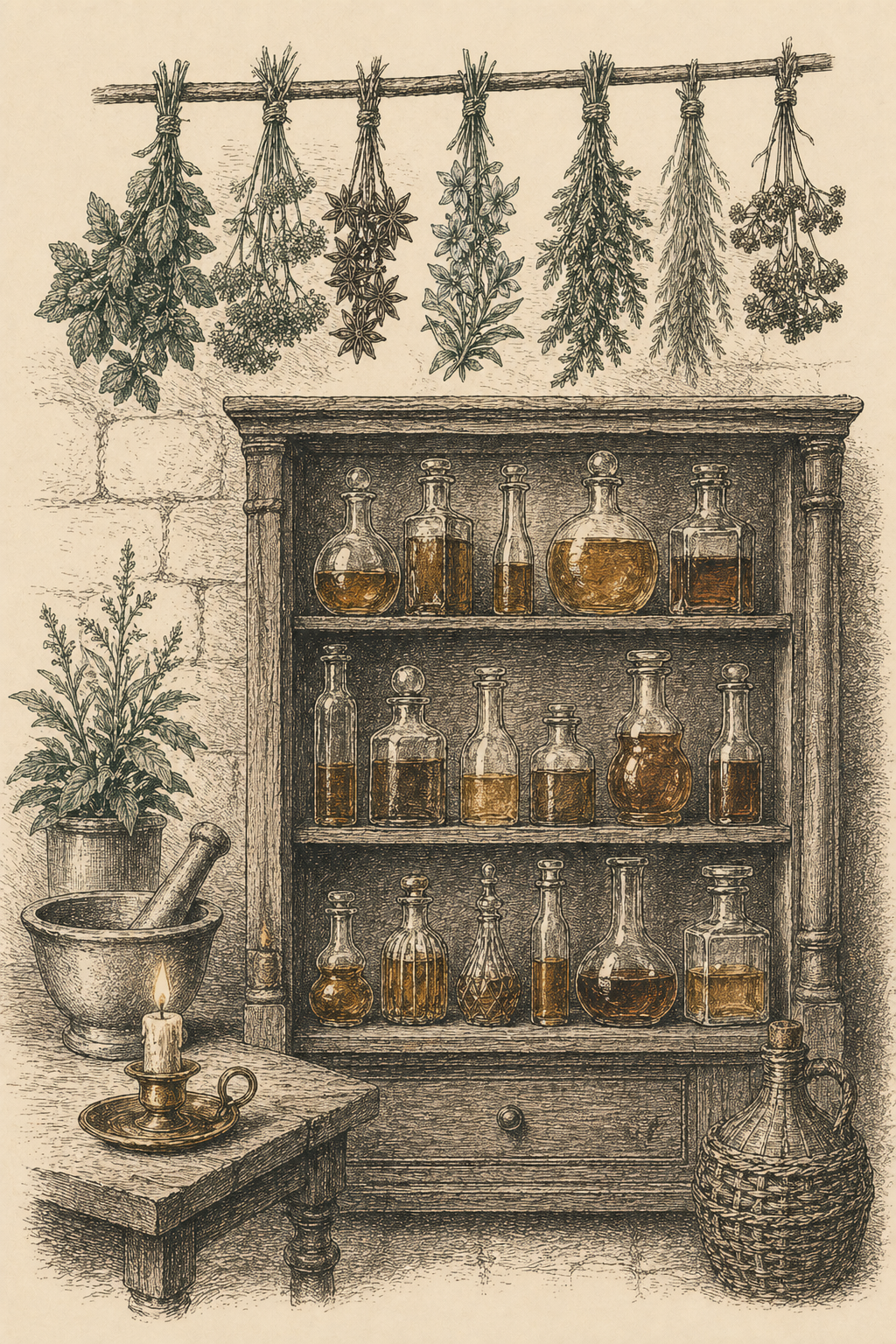

Volume VIII is the inversion volume. Where every prior book traced spirits as the exposure of fire, surplus, and empire, liqueurs invert all three: fire conceals (the original ingredients are dissolved into a composite that hides them), surplus becomes curation (a liqueur typically requires dozens of non-surplus ingredients gathered deliberately), and empire becomes secrecy (Carthusian monastery vaults, Italian family dynasties, corporate formulas guarded for centuries).
The structural argument: a liqueur is a recipe pretending to be an ingredient. If a distillery burns down you rebuild it. If a formula is lost the product is gone forever — there is no Chartreuse without the two monks who currently know the recipe, and they will not write it down.
The reference middle organizes the category into a seven-family taxonomy: Herbal & Monastic (Chartreuse, Bénédictine, Strega), Amari & Bitter (Fernet, Aperol, Campari, Cynar, the digestif tradition), Fruit & Citrus (Cointreau, Grand Marnier, the curaçao family), Nut/Bean/Seed (Frangelico, Amaretto, Kahlúa, the coffee liqueurs), Cream (Baileys and the Irish Cream genre), Anise & Absinthe (the wormwood family, including the absinthe ban and unbanning), and High-Proof (Green Chartreuse VEP, Kübler, navy-strength expressions).
The closing chapter on the Chartreuse allocation crisis makes the secrecy stakes real — the Carthusians have throttled production deliberately, and the bar industry is reckoning with what secrecy as economic strategy actually means in practice.