The Volumes · Vol. 05
Rum
Kill-Devil and the Sugar Engine
14 chapters · 88,000 words
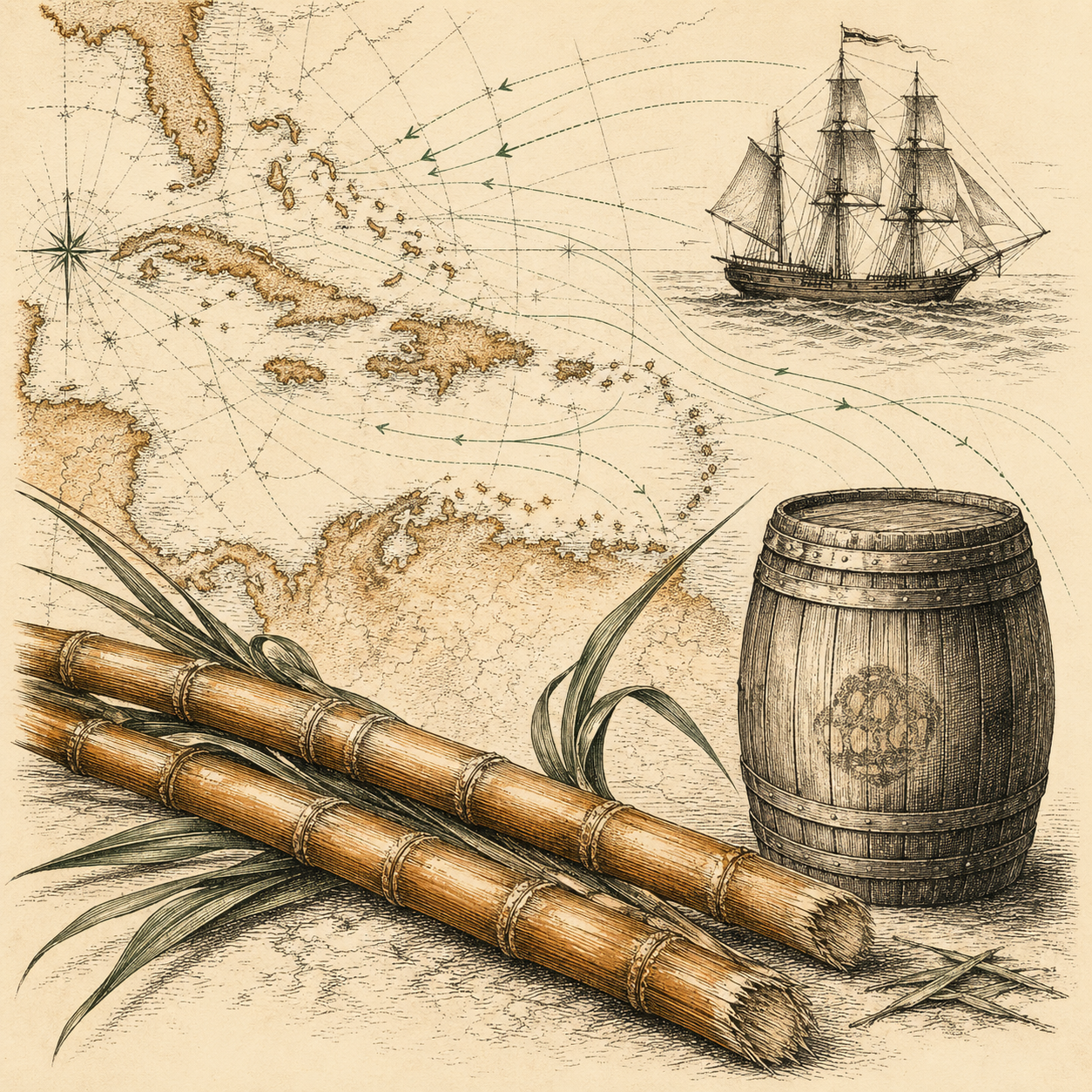

The purest expression of the fire/surplus/empire thesis. Sugar refining produces a two-to-one ratio of waste molasses to product, and the eighteenth-century plantation owner discovered that distilling the waste effectively doubled the revenue. From that economic accident came an entire spirit family — and the volume does not look away from what powered it.
Volume V refuses the sanitizing version. The chapters on the Triangle Trade name the trade as it operated. The chapters on the working distilleries name the people whose hands actually held the knowledge — enslaved Africans whose distilling skill was the production engine even as the bottles bore the planter’s name. The Caribbean did not just receive rum culture; the Caribbean made rum, and made it again on its own terms after independence.
The reference middle of the book covers the production spectrum, which is the widest of any spirit. From overproof Jamaican pot-still rums with their dunder pits (literal vats of fermenting solids that carry forward flavor across decades) through Cuban aguardiente and Spanish-style column rums, through the French rhum agricole tradition that distills from fresh cane juice rather than molasses. From crude kill-devil of the 1640s to Foursquare’s twenty-first-century Single Blended Cask — the volume connects the bottles back to the system that produced them.
The Navy chapter is its own story.